
Applications

Mountaineering
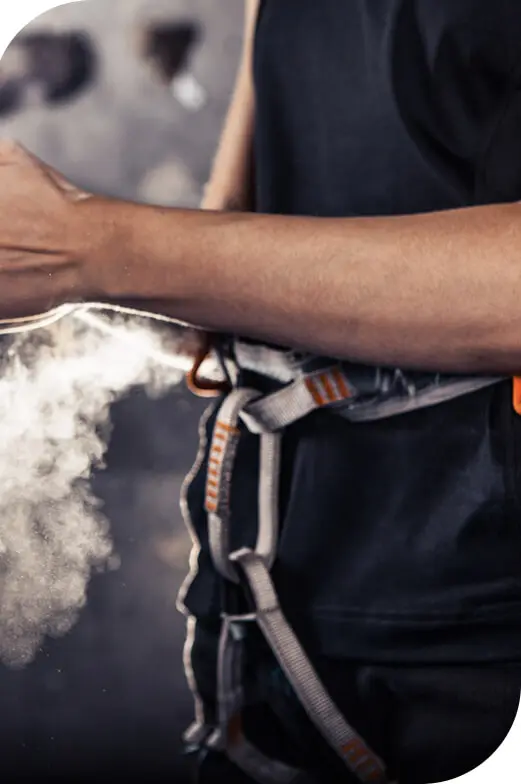
Mountaineering Hardware & Safety Equipment Solutions
Professional mountaineering equipment is a life-critical safety system for high-altitude expeditions and technical alpine climbs. Carabiners, connectors, and anchoring systems must withstand extreme cold, moisture, and dynamic loading conditions from ice formation to sudden fall arrest forces. Whether sourcing certified mountaineering hardware for retail distribution or developing custom OEM components, understanding real-world alpine performance requirements is the first step toward safer climbing systems.
In demanding mountain environments, hardware undergoes repeated stress cycles, rapid load changes during rope tensioning, and accelerated corrosion from exposure to ice melt and UV radiation. These conditions require not only high tensile strength but sustained fatigue resistance over thousands of use cycles — qualities that distinguish professional mountaineering hardware from general outdoor equipment.
We work closely with international outdoor equipment brands and expedition outfitters to engineer custom mountaineering hardware that meets specific weight, strength, and ergonomic requirements. Our solutions cover carabiner design, connector optimization, and full climbing system integration — from concept validation to production-ready components.
Certification Requirements for Mountaineering Hardware
Mountaineering connectors and anchoring devices must comply with internationally recognized safety standards. The following certifications are required for market entry in Europe, North America, and most global markets:
- UIAA — International Climbing and Mountaineering Federation standard for connectors and climbing hardware
- EN 12275 — European standard for mountaineering connectors, defining mechanical performance criteria
- CE Marking — European Conformity declaration required for sale within the EU and EEA markets
These standards establish mandatory performance thresholds for:
- Minimum breaking strength along major and minor axes
- Gate-open strength performance under load
- Durability under repeated loading cycles
- Corrosion resistance in harsh outdoor and alpine environments
Certification compliance ensures every mountaineering component performs consistently under both static and dynamic loading — giving climbers, guides, and expedition teams the confidence they need in high-risk alpine environments.
Engineering & Structural Performance
Mountaineering hardware engineering addresses three critical performance areas: structural strength, design optimization, and rigorous testing validation.
- Structural Strength Specifications: Mountaineering hardware is engineered to meet or exceed globally recognized strength benchmarks:
Load Direction Minimum Breaking Strength- Major axis strength ≥ 20 kN
- Minor axis strength ≥ 7 kN
- Gate-open strength ≥ 6 kN
- Structural Design Optimization: Advanced design and manufacturing techniques are applied to improve load distribution and minimize stress concentration
- Smooth radius transitions at high-stress zones to reduce fatigue initiation
- Forged or precision-machined one-piece structures for maximum structural integrity
- Optimized gate mechanisms that maintain secure closure under dynamic load
- Material selection balancing high-strength aluminum alloys and stainless steel for optimal weight and corrosion resistance
- Testing & Validation: All mountaineering hardware undergoes rigorous validation before release
- Tensile strength testing to verify rated load capacity along all axes
- Fatigue testing simulating thousands of repeated use cycles
- Impact and drop testing to evaluate performance under sudden dynamic forces
- Salt spray and humidity corrosion resistance testing for long-term durability
Related Products
Rock Climbing
Rock Climbing Hardware — Carabiners, Quickdraws & Anchoring Systems
Rock climbing hardware is engineered for frequent use, dynamic fall loads, and continuous mechanical engagement. Unlike mountaineering equipment where environmental extremes dominate, climbing hardware faces a different challenge: repetitive stress from hundreds of clips, disengagements, and fall-arrest events across a single climbing season. Carabiners, quickdraws, and anchoring systems must deliver consistent mechanical performance, smooth gate operation, and long-term wear resistance.
Whether for indoor climbing walls, sport climbing crags, or trad climbing routes, hardware performance is directly linked to climber safety. Every component in the protection chain — from bolt hangers to rope-end carabiners — must function reliably under both static pre-load and high-energy dynamic falls.
Our rock climbing hardware solutions are engineered for OEM brands, climbing gyms, and professional athletes seeking optimized weight-to-strength performance, ergonomic clip geometry, and verified compliance with international climbing safety standards.
Certification Requirements for Rock Climbing Equipment
Rock climbing hardware must comply with the following internationally recognized standards before market distribution:
- EN 12275 — Connectors: defines performance criteria for carabiners used in rock climbing
- EN 566 — Slings and textile loops: material strength, stitching requirements, and fatigue performance
- UIAA Safety Standards — Additional performance benchmarks recognized by the global climbing community
These certifications define requirements for:
- Dynamic strength performance under simulated fall-arrest conditions
- Gate durability and cycling performance across repeated open/close operations
- Resistance to wear and gate deformation under rope friction loads
- Consistency under repeated loading throughout the product lifecycle
Certified climbing hardware provides assurance that products maintain structural integrity under frequent, demanding use scenarios — from beginner gym sessions to elite multi-pitch sport climbing.
Engineering & Structural Performance
Climbing hardware design focuses on long-term usability and durability under high-frequency use, addressing structural benchmarks and rigorous validation.
- Structural Strength Specifications: Rock climbing carabiners and connectors are rated to handle dynamic fall forces:
Load Direction Minimum Breaking Strength- Major axis strength ≥ 20 kN
- Minor axis strength ≥ 7 kN
- Gate-open strength ≥ 6 kN
- Structural Design Optimization: Climbing hardware design focuses on long-term usability and durability under high-frequency use:
- Ergonomic shaping for fast, reliable one-hand clipping during dynamic movement
- Anti-snag gate profiles to prevent accidental opening during rope run
- Surface treatments and anodizing to reduce rope friction and slow wear progression
- Optimized load-path geometry for balanced stress distribution across the connector body
- Testing & Validation: Rock climbing hardware undergoes extensive validation to ensure reliability in repeated-use environments:
- Gate cycling endurance testing simulating thousands of open/close operations
- Dynamic drop tests replicating UIAA fall factors to verify fall-arrest capacity
- Abrasion resistance testing under simulated rope friction conditions
- Load endurance testing across the full rated strength range
Related Products
Fall Protection Equipment
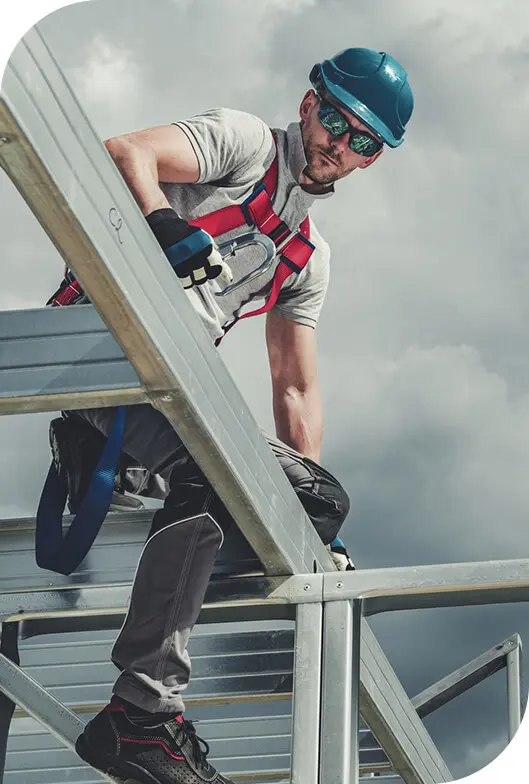
Fall Protection Systems — Industrial Height Safety Hardware
Fall protection systems are the primary safety layer for workers operating at height in construction, industrial maintenance, telecommunications, and energy sectors. A compliant fall protection system integrates anchorage points, connectors, lifelines, self-retracting lanyards (SRLs), and energy-absorbing devices into a coordinated arrest system designed to prevent fall-related injuries and fatalities.
Unlike recreational climbing hardware, industrial fall protection equipment operates in regulated environments where compliance, traceability, and documentation are as important as mechanical performance. Equipment must perform reliably under both static pre-load conditions — such as a worker leaning on a guardrail — and high-energy dynamic fall arrest events where shock loads can exceed several kilonewtons within milliseconds.
We supply certified fall protection hardware components to safety equipment manufacturers, construction companies, and industrial OEM brands worldwide. Our engineering team supports product development from initial specification through full certification testing and mass production.
Certification Requirements for Fall Protection Hardware
Industrial fall protection products must meet strict regulatory and technical standards. The following certifications are required depending on application and geography:
- EN 795 — Anchorage devices for personal fall protection: load capacity and installation requirements
- ANSI Z359 — American National Standard for fall protection systems, equipment, and procedures
- OSHA 29 CFR 1926 Subpart M — US regulatory requirements for construction fall protection
These standards specify:
- Minimum static and dynamic load-bearing capacity for anchorage and connector hardware
- Dynamic fall arrest performance including peak arrest force and deployment distance
- Structural integrity under sustained loads simulating worker weight and environmental stress
- System compatibility and safety factors for full fall protection assemblies
Regulatory compliance ensures fall protection equipment meets legal requirements for workplace use and provides the traceability documentation required by safety auditors and project managers.
Engineering & Structural Performance
Climbing hardware design focuses on long-term usability and durability under high-frequency use, addressing structural benchmarks and rigorous validation.
- Structural Strength Specifications: Fall protection components are engineered with higher safety margins than recreational hardware to account for the demanding nature of industrial use.
- Minimum static strength ≥ 12 kN (standard systems)
- Fall arrest peak force: Per EN 355 / ANSI Z359.13
- Safety factor (anchorage) ≥ 2× rated working load
- Structural Design Optimization: Industrial fall protection hardware design emphasizes durability, reliability, and seamless integration within full safety systems:
- Reinforced structural geometry providing high resistance to static, shock, and side-load forces
- Redundant load paths designed to maintain system integrity even if a secondary element is compromised
- Full compatibility with industry-standard lifeline diameters and anchor rail systems
- Corrosion-resistant coatings and stainless steel construction for long-term outdoor and marine environments
- Testing & Validation: Every fall protection product is validated through rigorous industrial test protocols before certification:
- Static load testing at multiples of rated working load per applicable standard
- Dynamic fall arrest testing with calibrated drop masses per EN 355 / ANSI Z359
- Long-term load endurance testing to simulate sustained worker attachment loads
- Environmental resistance testing: salt spray, UV exposure, extreme temperature cycling
Related Products
Rescue Operations
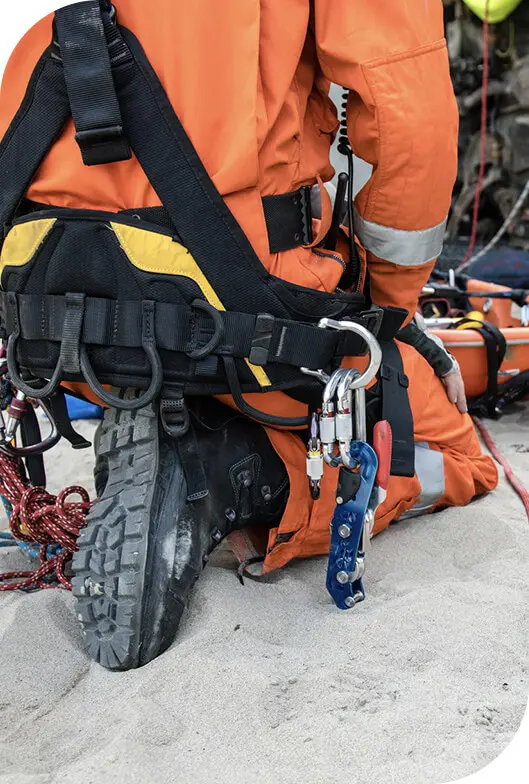
Rescue Operations Hardware — High-Load Safety Equipment for Emergency Response
Rescue operations demand the most reliable hardware in the safety industry. Mountain search and rescue (SAR), industrial emergency response, confined space rescue, and disaster recovery teams operate under extreme time pressure, in unpredictable environments, where hardware failure is not an option. Rescue equipment must support rapid deployment, multi-person loads, and complex rigging configurations that standard single-user climbing or fall protection equipment is not designed to handle.
A complete rescue system integrates high-capacity connectors, mechanical advantage pulleys, anchor hardware, descent control devices, and patient packaging equipment — all of which must interoperate reliably under field conditions. Equipment must also allow for fast handling and adaptive rigging by responders wearing gloves, often in low visibility or high-wind conditions.
We engineer and manufacture rescue hardware for SAR organizations, fire and rescue services, military units, and industrial emergency response teams. Our products are designed to the highest load ratings in the sector, with engineering validation processes that exceed standard recreational and industrial specifications.
Certification Requirements for Rescue Equipment
Rescue hardware must comply with specialized standards that reflect the higher loads, multi-user scenarios, and critical deployment conditions of emergency operations:
- NFPA 1983 — National Fire Protection Association standard for life safety rope and equipment for emergency services
- EN 341 — Descender devices for rescue: load capacity, control performance, and thermal resistance
- EN 1496 — Rescue lifting systems: strength, deployment, and patient-load capacity requirements
These standards define requirements for:
- High load capacity supporting multi-person and patient-plus-rescuer loads
- Consistent performance under emergency deployment conditions including sudden shock loading
- Reliability in extreme environments: wet rock, confined spaces, high heat, and low temperature
- Operational safety and consistency across the full range of rescue system configurations
Compliance with NFPA and EN rescue standards ensures that hardware used in life-safety operations delivers documented, verified performance — and that rescue teams can trust their equipment when every second matters.
Engineering & Structural Performance
- Structural Strength Specifications: Rescue hardware is engineered to support significantly higher loads than standard single-user equipment:
- Multi-person system load: Typically ≥ 40 kN (varies by standard)
- Dynamic impact tolerance: High — shock-absorbing geometry required
- Rescue descender rated load: Per EN 341 Class A/B classification
- Structural Design Optimization: Rescue hardware design prioritizes functionality, speed of operation, and fail-safe performance under extreme pressure:
- Quick-release and quick-connect mechanisms for fast, glove-compatible operation in emergency conditions
- Multi-functional design enabling integration across haul systems, belay stations, and lowering operations
- Enhanced safety factors and redundant load paths that exceed single-use recreational hardware margins
- Robust construction using high-strength alloys and stainless steel for deployment in any terrain or climate
- Testing & Validation: Rescue hardware is validated through the most demanding test protocols in the safety hardware sector:
- High-load tensile testing at multi-person rated loads per NFPA 1983 and EN 1496
- Dynamic impact testing replicating rescue fall arrest and sudden patient-load events
- Environmental simulation testing across temperature extremes, wet conditions, and chemical exposure
- Operational endurance testing verifying function across repeated deployment and retrieval cycles
Every validation method is designed to confirm that rescue hardware performs at its rated specification when it matters most — in actual emergency rescue operations where lives depend on equipment reliability.