


Fall Protection Equipment
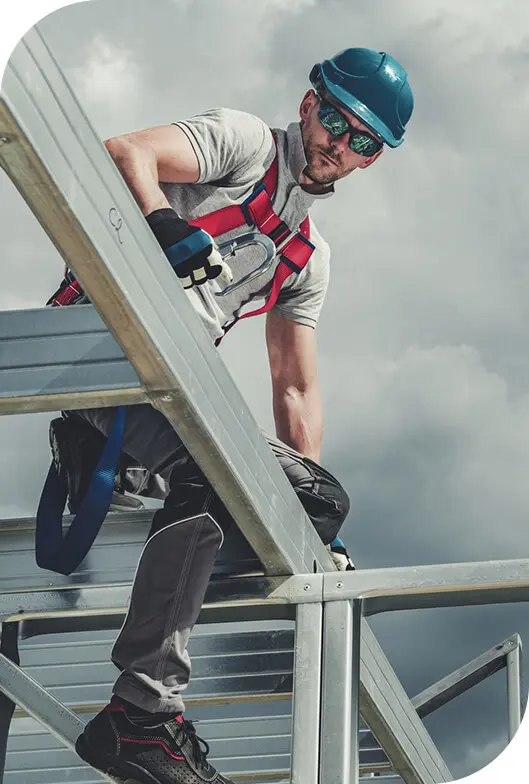
Fall Protection Systems — Industrial Height Safety Hardware
Fall protection systems are the primary safety layer for workers operating at height in construction, industrial maintenance, telecommunications, and energy sectors. A compliant fall protection system integrates anchorage points, connectors, lifelines, self-retracting lanyards (SRLs), and energy-absorbing devices into a coordinated arrest system designed to prevent fall-related injuries and fatalities.
Unlike recreational climbing hardware, industrial fall protection equipment operates in regulated environments where compliance, traceability, and documentation are as important as mechanical performance. Equipment must perform reliably under both static pre-load conditions — such as a worker leaning on a guardrail — and high-energy dynamic fall arrest events where shock loads can exceed several kilonewtons within milliseconds.
We supply certified fall protection hardware components to safety equipment manufacturers, construction companies, and industrial OEM brands worldwide. Our engineering team supports product development from initial specification through full certification testing and mass production.
Certification Requirements for Fall Protection Hardware
Industrial fall protection products must meet strict regulatory and technical standards. The following certifications are required depending on application and geography:
- EN 795 — Anchorage devices for personal fall protection: load capacity and installation requirements
- ANSI Z359 — American National Standard for fall protection systems, equipment, and procedures
- OSHA 29 CFR 1926 Subpart M — US regulatory requirements for construction fall protection
These standards specify:
- Minimum static and dynamic load-bearing capacity for anchorage and connector hardware
- Dynamic fall arrest performance including peak arrest force and deployment distance
- Structural integrity under sustained loads simulating worker weight and environmental stress
- System compatibility and safety factors for full fall protection assemblies
Regulatory compliance ensures fall protection equipment meets legal requirements for workplace use and provides the traceability documentation required by safety auditors and project managers.
Engineering & Structural Performance
Climbing hardware design focuses on long-term usability and durability under high-frequency use, addressing structural benchmarks and rigorous validation.
- Structural Strength Specifications: Fall protection components are engineered with higher safety margins than recreational hardware to account for the demanding nature of industrial use.
- Minimum static strength ≥ 12 kN (standard systems)
- Fall arrest peak force: Per EN 355 / ANSI Z359.13
- Safety factor (anchorage) ≥ 2× rated working load
- Structural Design Optimization: Industrial fall protection hardware design emphasizes durability, reliability, and seamless integration within full safety systems:
- Reinforced structural geometry providing high resistance to static, shock, and side-load forces
- Redundant load paths designed to maintain system integrity even if a secondary element is compromised
- Full compatibility with industry-standard lifeline diameters and anchor rail systems
- Corrosion-resistant coatings and stainless steel construction for long-term outdoor and marine environments
- Testing & Validation: Every fall protection product is validated through rigorous industrial test protocols before certification:
- Static load testing at multiples of rated working load per applicable standard
- Dynamic fall arrest testing with calibrated drop masses per EN 355 / ANSI Z359
- Long-term load endurance testing to simulate sustained worker attachment loads
- Environmental resistance testing: salt spray, UV exposure, extreme temperature cycling